If you think about how AI shows up at work today, it mostly behaves the same way. You ask it something, and it responds. It drafts content, summarises documents, helps with code, maybe even answers customer queries. Helpful, yes. But it still waits for you to tell it what to do.
That’s starting to change.
A new kind of AI is emerging, often referred to as Agentic AI. Instead of just responding to prompts, these systems can plan tasks, decide what to do next, and take action on their own. In simple terms, AI is moving from being an assistant to taking on small pieces of work independently.
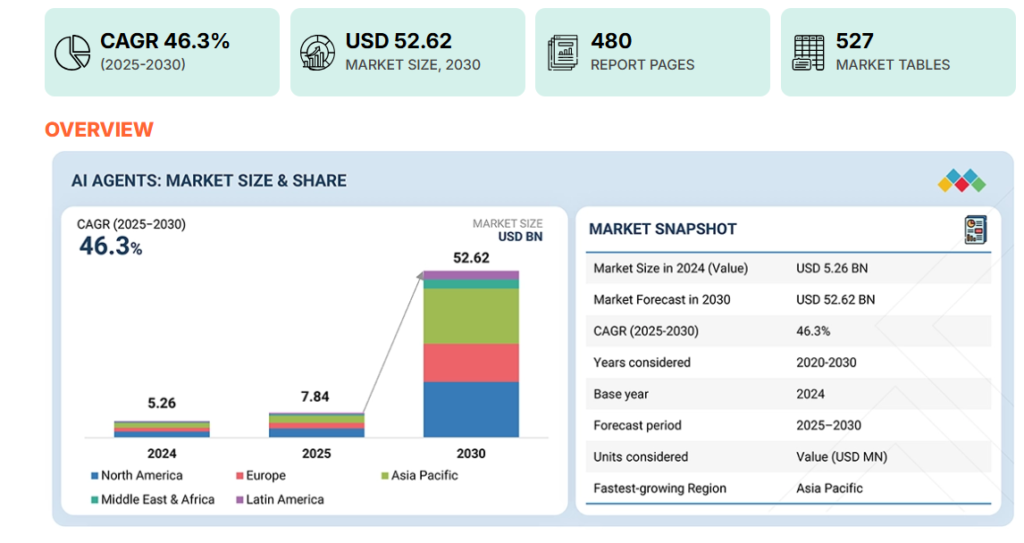
This shift isn’t focused only on better models. It’s also considering changing expectations inside organisations. That’s why 2026 keeps coming up in conversations around AI. Not because AI suddenly becomes magical, but because businesses are finally ready to let AI do more than just talk. According to recent reports, the AI Agents market is expected to grow from USD 7.84 billion in 2025 to USD 52.62 billion in 2030, that’s a CAGR of 46.3%!
What Agentic AI Actually Is (and Why It’s Different)
At its core, Agentic AI refers to AI systems that can work toward a goal on their own. Instead of waiting for prompts, they can plan steps, make decisions, and take action with limited human involvement.
What makes Agentic AI different from today’s AI
Most AI systems today are reactive. They wait.
- You ask a question → they answer
- You give an instruction → they follow it
- You guide every step → they respond step by step
Agentic AI breaks this pattern.
- You define a goal
- The system figures out how to achieve it
- It executes tasks using tools, data, and workflows
- It checks progress and adjusts along the way
That shift from responding to acting is the real change.
Common terms you’ll hear in this space
You’ll often see Agentic AI described using different labels:
- AI agents
- Agentic systems
- Proactive AI
- Multi-agent systems
The terminology varies, but the underlying idea stays the same.
Why Agentic AI Is Gaining Momentum Now
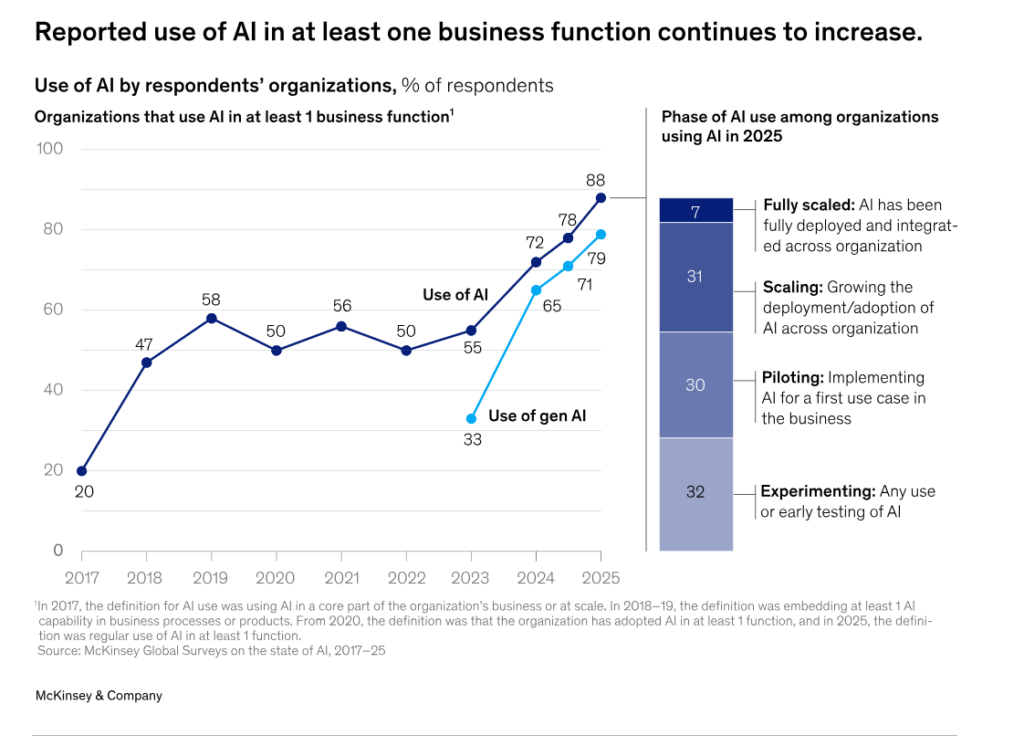
Approximately 23% of organisations are already scaling agentic AI in at least one business area, and another 39% are experimenting with agentic systems.
- You’re No Longer Satisfied with AI That Just Helps
If you’re honest, AI has been useful so far, but not game-changing in the way it was promised. It drafts faster, summarises better, and answers questions on demand. But at the end of the day, your team is still doing the actual work. You still have to decide what needs to be done, break it down, and push things forward.
That’s why expectations are shifting. You’re not just looking for AI that helps you work faster. You’re looking for AI that can take responsibility for parts of the work itself.
- Your Workflows Are Already Too Complicated to Manage Manually
Look at how work actually gets done in your organisation. Tasks don’t live in one system. They move between tools, dashboards, tickets, emails, and people. A lot of effort goes into simply keeping things moving. Following up. Checking status. Connecting the dots.
This is where Agentic AI starts to make sense. Instead of responding to individual prompts, it’s designed to manage a sequence of actions across systems. That’s a very different role, and one that fits modern workflows far better than reactive AI ever could.
- You’ve Seen Autonomy Fail Before, and You’re Right to Be Skeptical
Autonomous AI isn’t a brand-new idea. You may have seen earlier attempts fall short. Systems lost context, stalled midway through tasks, or needed constant human intervention. So autonomy stayed limited, and trust never fully formed.
What’s changed is consistency. Today’s systems are better at staying on track, handling longer chains of decisions, and adjusting when something changes. That doesn’t mean they’re perfect, but they’re far more usable than they were even a few years ago.
- Your Organisation Is More Ready Than It Used to Be
Even if the technology had worked earlier, your organisation probably wasn’t ready for it. That’s no longer the case. Your infrastructure is more mature. Systems are better connected. Teams are more comfortable working alongside AI. There’s also more clarity around oversight and control.
All of this makes it easier to introduce AI that does more than assist, without creating confusion or risk.
How to Prepare for an Agentic AI-Driven Future
- Build Trust Before You Build Scale
Put strong testing, validation, and monitoring in place early. Agentic systems need guardrails. This includes mechanisms to regularly check outputs for risk, bias, and unintended behaviour, not just performance.
- Make Decisions Easier to Understand
As AI agents take on more responsibility, transparency matters. Invest in approaches that help teams understand why an agent acted a certain way, especially in decision-heavy workflows.
- Plan for Integration, Not Isolation
Agentic AI works best when it fits naturally into existing systems. Think beyond standalone tools and focus on how agents connect with current platforms, workflows, and operational infrastructure.
- Prepare Your People, Not Just Your Systems
Upskilling is critical. Training should help teams learn how to work with AI agents, not around them. Encourage collaboration between technical teams and business users to build shared confidence.
- Strengthen the Data Foundation
Agentic systems depend on reliable data. Prioritise data quality, access, and governance so agents can act on information you actually trust.
- Treat Change Management as a Core Requirement
Adoption doesn’t happen automatically. Communicate clearly, involve teams early, and show where AI agents are helping in real ways. Small wins go a long way in building momentum.
- Start Narrow, Then Expand
Focus on specific problems where agentic systems can deliver visible value. Avoid trying to automate everything at once. Once trust builds, scaling becomes far easier.
- Encourage Responsible Experimentation
Create space for teams to explore and test agentic tools. Controlled experimentation helps surface opportunities and challenges early, while keeping innovation grounded in reality.
So what happens to organisations when this way of working becomes the norm?
The Rise of the Agentic Organisation
- When Work Stops Being a List of Tasks
Once Agentic AI enters everyday workflows, the way work is structured begins to change. Processes are no longer designed around individual steps or handoffs. Instead, the focus shifts to outcomes. What needs to be achieved, and what level of human involvement is actually necessary to get there?
This is often the first signal that something deeper is changing inside the organisation.
- Why Human Roles Begin to Shift Naturally
As AI systems take on more execution, teams spend less time chasing tasks and more time shaping direction. Humans step in to define goals, review outcomes, and handle exceptions. The routine flow in between moves forward with far less manual effort.
This transition isn’t sudden or disruptive. It happens gradually, as confidence builds and more workflows are trusted to run with a higher degree of autonomy.
- From Technology Choice to Operating Model Decision
Over time, Agentic AI stops feeling like a standalone tool decision. Questions around autonomy, accountability, and oversight start influencing how teams are structured and how work is governed. The conversation moves beyond deployment and into how humans and AI agents collaborate day to day.
That’s when it becomes clear that this shift affects the organisation as a whole, not just the teams working on AI.
Conclusion
If there’s one clear takeaway, it’s this: AI is moving from assistance to execution. Agentic AI represents a shift in how work gets done, not just how quickly it gets done.
By 2026, the organisations that benefit most won’t be the ones experimenting endlessly, but the ones that have thought carefully about where autonomy makes sense, how humans stay in control, and how workflows need to change. However, its important to note that according to industry leadership, real benefits from agentic AI are expected to materialise meaningfully within 18–24 months once systems are integrated into core business workflows.
AI won’t replace decision-makers. But it will increasingly handle the work that slows decision-makers down. And that changes what productivity, scale, and efficiency really look like.At Zamun, we help brands turn emerging technologies like agentic AI into practical marketing advantage. If you’re exploring what AI-driven personalisation and smarter workflows could look like for your business, let’s talk.
FAQs:
Agentic AI refers to AI systems that can plan, decide, and execute tasks on their own instead of waiting for prompts.
Generative AI responds to inputs. Agentic AI works toward goals and completes tasks with minimal intervention.
No. It shifts human effort away from execution and toward oversight, judgement, and decision-making
In repetitive, decision-heavy workflows where coordination and follow-ups take up significant time.
Now. Even if full deployment comes later, design decisions made today influence how easily Agentic AI can be adopted.
NowTheNext Glossary
Agentic AI
AI systems designed to autonomously plan, decide, and act toward a defined goal.
AI Agent
An individual AI system that can perform tasks independently within a larger workflow.
Multi-Agent Systems
Setups where multiple AI agents collaborate or coordinate to achieve complex objectives.
Task Orchestration
The process of managing and sequencing multiple steps across tools and systems to complete a task.
Human-in-the-Loop
A model where humans retain oversight and decision authority while AI handles execution.